

Coaches and experts often ask who actually runs paid ads for their businesses. The answer is not a single entity but a combination of in-house founders, specialized media buyers, and performance marketing agencies. Virtual Income School helps coaches build the business infrastructure needed to support these ad strategies effectively. This guide covers the primary platforms, the types of professionals who manage campaigns, and the optimization techniques required for sustainable growth.
Paid Ad Platforms
Choosing the right platform is the first step in any paid acquisition strategy. Each platform serves a different user intent and demographic profile. Coaches must align their offer with the platform where their ideal client already spends time. For additional details, review the Privacy Policy.
Meta and LinkedIn
Search and Video
Google Search Ads capture high-intent users who are actively looking for solutions. YouTube Ads provide a visual medium for demonstrating expertise and building trust before a user ever clicks a link. These platforms are essential for coaches who rely on authority and proof of results. For additional details, review the .
Performance Marketing Agencies
Performance marketing agencies are firms that manage paid media on behalf of clients with a focus on measurable outcomes. These agencies typically charge a percentage of ad spend or a fixed monthly retainer. They provide a full-service approach, including strategy, creative production, and reporting. For additional details, review the Customer Experience.
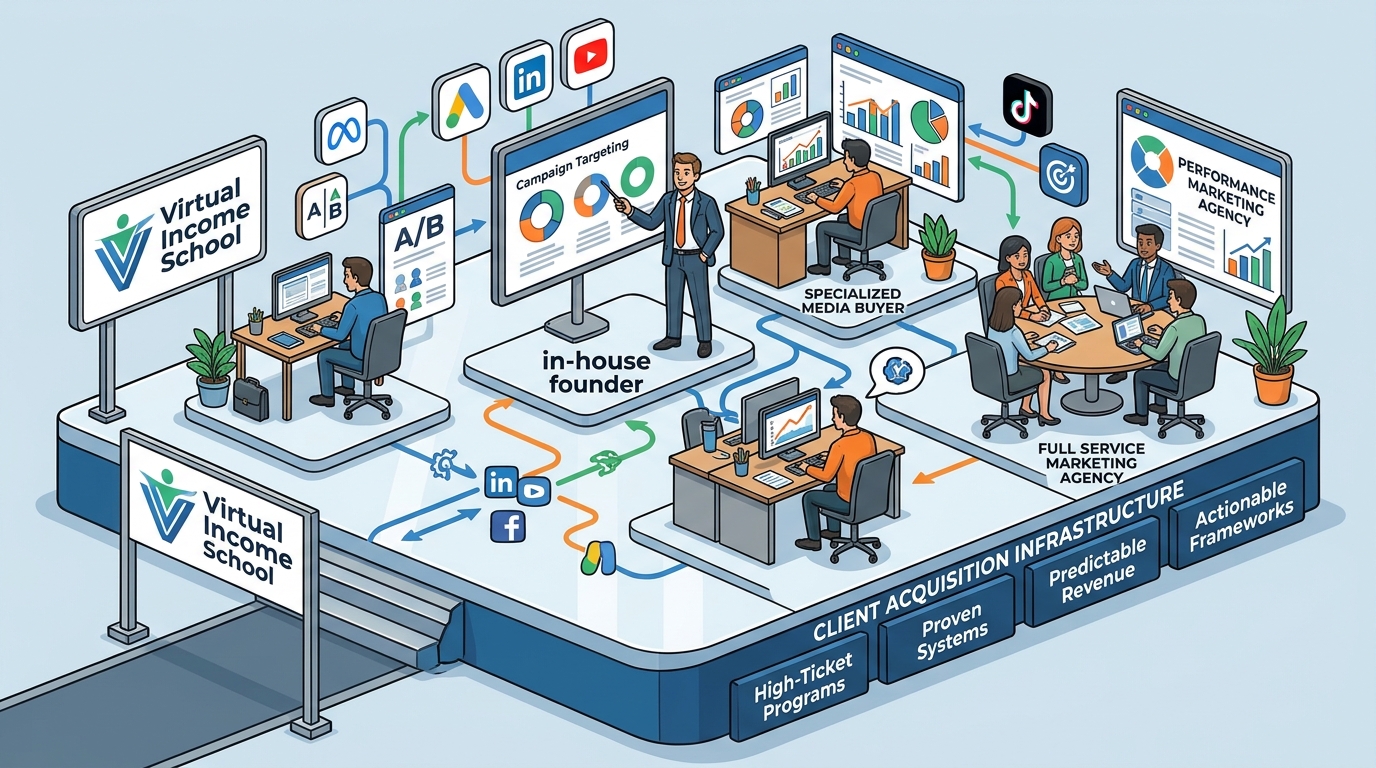
Full-Service vs. Niche
Full-service agencies handle all aspects of digital marketing, including SEO and content. Niche agencies specialize in specific industries, such as health, finance, or business coaching. For a coaching business, a niche agency often understands the sales cycle and objection handling better than a generalist firm.
Cost Structures
Media Buyers
A media buyer is a specialist who focuses exclusively on the execution and optimization of paid ad campaigns. Unlike an agency, a media buyer may work as a freelancer or a consultant. They are responsible for setting up campaigns, managing budgets, and adjusting bids in real-time.
The Role of the Media Buyer
The media buyer acts as the operator of the ad account. They monitor key performance indicators such as Cost Per Click (CPC) and Return on Ad Spend (ROAS). They do not typically handle brand strategy or content creation, leaving those tasks to the coach or a separate creative team.
Freelance vs. In-House
Hiring a freelance media buyer is often more cost-effective for smaller coaching businesses. In-house media buyers are usually employed by larger organizations with significant ad budgets. For most independent coaches, a freelance partner provides the necessary expertise without the overhead of a full-time employee.
Audience Targeting
Audience targeting is the process of defining and reaching specific groups of users based on their attributes and behaviors. Effective targeting ensures that ad spend is directed toward individuals who are likely to convert. It is the foundation of any successful paid ad strategy.
Demographic and Interest Targeting
Demographic targeting uses data such as age, location, and income. Interest targeting uses data on what users like, follow, or engage with on the platform. For coaches, interest targeting is often more effective because it identifies users who are already interested in related topics.
Lookalike and Retargeting
Lookalike audiences are created by uploading a customer list to the platform. The platform then finds new users who share similar characteristics. Retargeting shows ads to users who have previously interacted with the brand. This combination allows coaches to scale acquisition while nurturing warm leads.
Campaign Optimization
Campaign optimization is the continuous process of adjusting ad variables to improve performance. It involves testing different creatives, headlines, and landing pages. Optimization is not a one-time task but an ongoing cycle of analysis and adjustment.
Creative Testing
Landing Page Alignment
Comparison of Ad Management Options
| Option | Best For | Cost Structure | Level of Control |
|---|---|---|---|
| In-House Founder | Early stage, low budget | Time only | High |
| Freelance Media Buyer | Growing businesses, specific skills | Hourly or Retainer | Medium |
| Performance Agency | Scaling, full-service needs | Percentage of Spend | Low |
Key Takeaways
- Paid ads for coaching businesses are managed by founders, freelancers, or agencies.
- Meta and LinkedIn are the primary platforms for consumer and B2B coaching respectively.
- Performance marketing agencies provide full-service management but can be expensive.
- Media buyers are specialists who focus on execution and optimization.
- Audience targeting relies on demographics, interests, and lookalike audiences.
- Campaign optimization requires continuous testing of creatives and landing pages.
Frequently Asked Questions
Who is responsible for running paid ads for a coaching business?
The responsibility can fall on the coach, a freelance media buyer, or a performance marketing agency. The choice depends on the business stage and budget.
What is the difference between a media buyer and an agency?
A media buyer is a specialist who executes and optimizes campaigns. An agency is a firm that provides a broader range of marketing services, including strategy and creative.
Which platform is best for coaching ads?
Meta is best for consumer-facing coaching. LinkedIn is best for B2B and executive coaching. Google Search is effective for high-intent queries.
How much does it cost to hire a media buyer?
Costs vary widely. Freelancers may charge hourly or a monthly retainer. Agencies often charge a percentage of ad spend or a fixed fee.
What is audience targeting in paid ads?
Audience targeting is the process of selecting specific groups of users to show ads to based on their attributes and behaviors.
How often should ad campaigns be optimized?
Campaigns should be monitored daily and optimized weekly. Creative assets should be refreshed regularly to prevent fatigue.